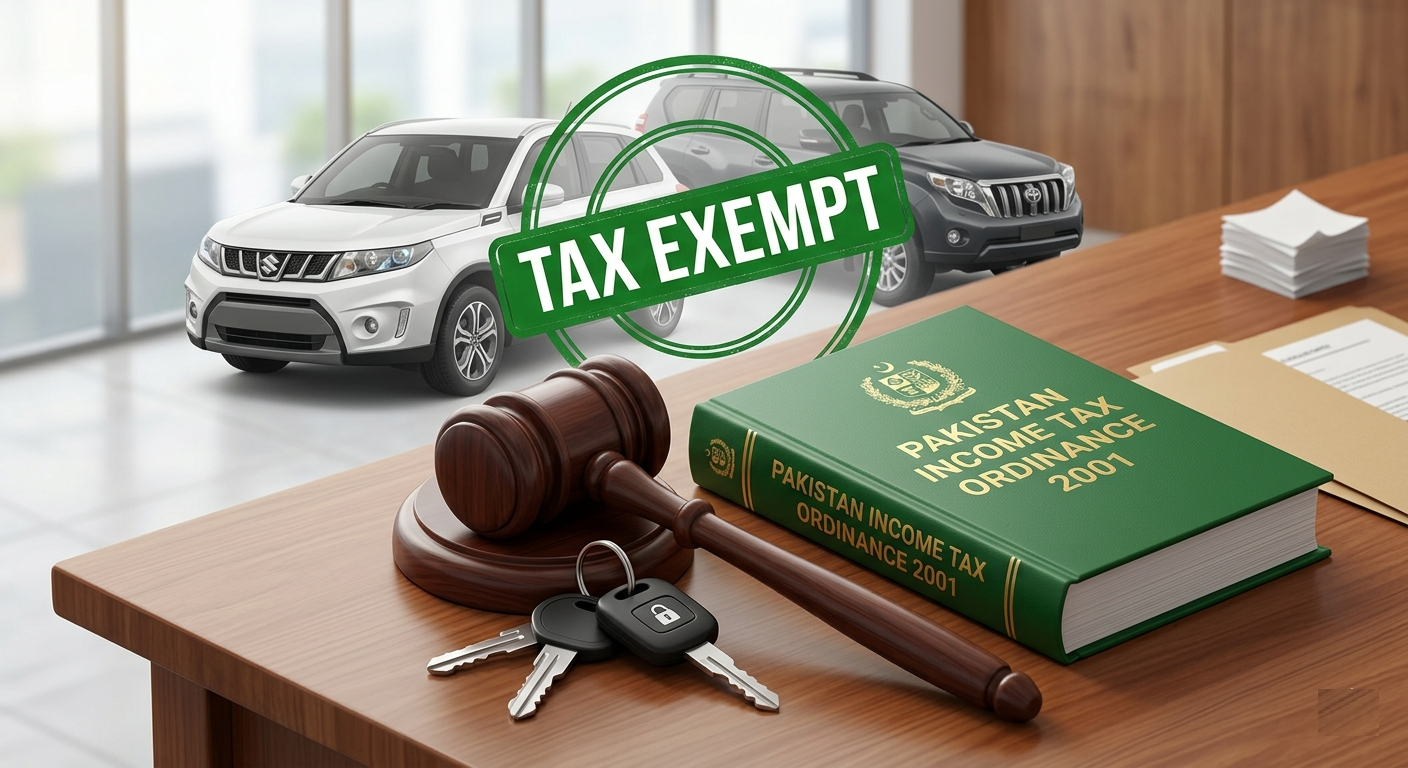
Many taxpayers fear the FBR will tax profits from selling personal vehicles. However, a landmark ruling in ITA No. 31/IB/2026 confirms that under Section 37(5) of the Income Tax Ordinance, 2001, personal movable property is exempt from capital gains tax, and the authorities cannot use residual clauses to bypass this exclusion.
When the FBR Targets
Your Personal Savings
Taxpayers often disclose gains from
selling personal assets, like a family car, in their wealth statements for
transparency. In a recent case, the Revenue attempted to tax a gain of Rs.
7,880,000 from the sale of a Vitara and a Prado. The authorities argued that if
a gain is not a capital gain, it must be taxed as Income from Other Sources
under Section 39. This creates a massive liability for individuals simply
upgrading their personal transport.
Legal Framework: Section 37 vs.
Section 39
The Income Tax Ordinance, 2001
categorizes income into specific heads. Section 37 governs Capital Gains, but Section
37(5) expressly excludes movable property held for personal use (except
jewelry) from the definition of a capital asset. Legal language dictates that
if an asset is not a capital asset, no tax can arise under this head.
Conversely, Section 39 is a residual provision meant for unexplained income or
items not elsewhere classified. The Tribunal clarified that while the Sales Tax
Act, 1990 handles commercial transactions, the Income Tax Ordinance must
respect statutory exclusions.
Appreciation and Criticism
It provides vital protection for individual taxpayers, ensuring that personal mobility is not penalized. It prevents the Revenue from "reclassifying" exempt receipts to meet tax targets. But for the Revenue, it limits the scope of the catch-all Section 39, requiring more rigorous proof before an asset can be deemed taxable stock-in-trade. The Tribunal deserves appreciation for upholding the principle of specialty over generality, ruling that a specific exclusion in Section 37 cannot be neutralized by a general provision like Section 39. Some critics might argue this allows high-net-worth individuals to flip luxury cars tax-free; however, the law is clear that unless the vehicles are stock-in-trade, they remain personal assets.
Practical Guide & Conclusion
If you sell a personal vehicle, ensure it is documented in your Wealth Reconciliation Statement. If challenged, cite ITA No. 31/IB/2026, which holds that once a receipt is statutorily excluded from a charging provision, it cannot be artificially taxed via residual clauses. In conclusion, the Tribunal’s decision to annul the assessment serves as a definitive shield for taxpayers against arbitrary reclassification of personal receipts.
Copyright @ Taxationist. Designed By TechWare House